
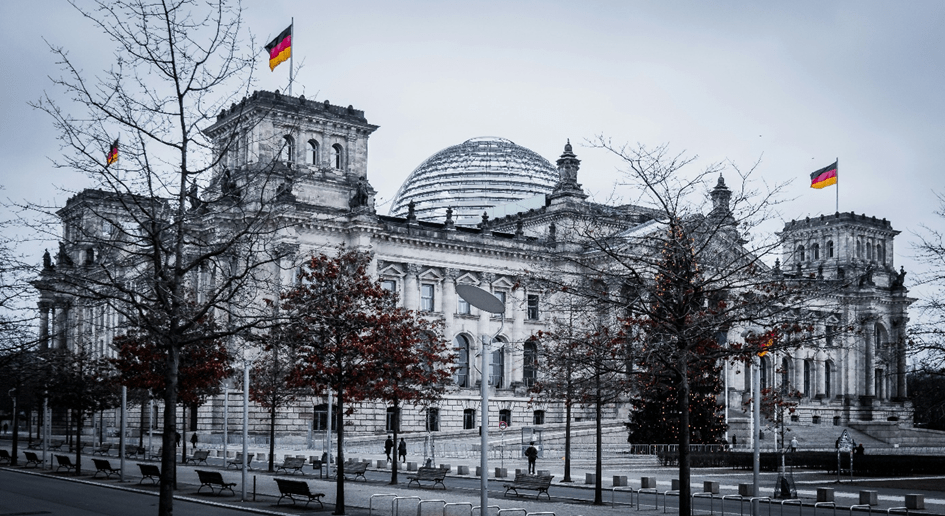
The 2025 German Federal Election on 23 February 2025 is approaching, and German political parties have presented their election programs as they are positioning themselves towards voters.
Whilst the government still in office had intended to introduce an amendment to German antitrust law during its term (which would have been the second in the legislative period with planned legislative changes such as e.g., raising merger control thresholds), it will no longer be able to do so due to the snap election. This post outlines the positions on antitrust law of the parties that were part of the current and previous government – CDU/CSU, SPD, Green Party and FDP.
CDU/CSU
After the CDU/CSU had been in the opposition for the first time since chancellor Merkel’s era ended, it is now striving to be part of the government again and regain the role of chancellor with Friedrich Merz.
With respect to antitrust law, the so-called Union emphasizes the importance of strong competition for the German economy and advocates for a modernized antitrust law that considers the global market as a benchmark. This could tie in with the frequently debated question whether competitive assessments (e.g., in merger cases) should not regularly be based on markets that, in geographical terms, be defined more broadly.
Further, the party aims to tie the power of the German Federal Cartel Office to intervene in markets to specific legal violations. The election program does not provide any further details on this, but it could be assumed that the CDU is reluctant to, for example, introduce new legal presumptions concerning damages in cartel damages litigations or market power in merger or dominance cases.
Furthermore, the CDU claims to stand for fair competition across Europe and aims to enhance protections for producers and suppliers against unfair trade practices.
SPD
After the failed government with the Green Party and the FDP, the SPD is striving to remain in government with Olaf Scholz as the chancellor.
In its election program, the SPD speaks positively of the reports by Enrico Letta and Mario Draghi on strengthening European competitiveness and supports the European Commission in implementing them.
The election program is more specific when it comes to affordable groceries. The party sees antitrust law as a tool to counter unfair practices by large corporations that hinder market access for small and medium-sized enterprises. They seem willing to keep a close eye on the market power of the few large food retailers. To this end, the SPD intends to strengthen the relevant regulators and make food prices transparent and public from production to sale.
Green Party
The Greens are also trying to remain in government under the lead of the current Ministry of Economics Robert Habeck.
The Greens view antitrust law as a vital instrument for promoting sustainability and climate protection. They stand for a strong German and European competition policy with the independent Federal Cartel Office and the Commission at its center. According to the Greens, antitrust law needs to be further developed to protect small and medium-sized enterprises and consumers more effectively against monopolies. At European level, the Greens intend to revive the New Competition Tool (essentially an idea to give the Commission sector inquiry-like powers), primarily to protect domestic companies from unfair practices of large global corporations. Conversely, small-scale mergers and acquisitions in Germany and Europe shall be relieved of bureaucratic procedures.
The Greens, like the SPD, aim to closely scrutinize the food retailers with the existing tools under the current antitrust law.
FDP
The FDP is looking for a change in the political culture, meaning that they seem to be reluctant to be part of a similar government as before.
The FDP takes a liberal approach, advocating for deregulation. In a more general context, they call for reforms to provide businesses with more legal certainty and to reduce barriers to innovation. Whether the party sees antitrust law as an area of law that also requires deregulation remains unclear.
The election program gets much more precise when it comes to the German railway system. The FDP explicitly wants to strengthen competition on the railways. They intend to separate the network and operations of Deutsche Bahn (how remains unclear) and aim to open the market to allow for more competition to take place.
Further, the FDP stresses (i) the importance of law enforcement, expressly mentioning the Digital Service Act, and (ii) their supportiveness of German and European market supervisory authorities (presumably having the Federal Cartel Office and the Commission in mind).
The FDP also supports maintaining net neutrality to guarantee non-discriminatory internet access for businesses, particularly start-ups and small and medium-sized enterprises.
Conclusion and Outlook
The parties – at least in part – adopt (very) diverse approaches to antitrust law. While CDU/CSU and SPD propose modernization and, in some cases, stricter measures to address the challenges of the digital economy and support SMEs, the FDP advocates for deregulation and adjustments to meet alleged business needs. The Greens, meanwhile, emphasize ecological criteria and sustainability in competition.
These varied approaches reflect the broad spectrum of political views on the role of antitrust law in Germany. While, according to the latest election forecasts a change of political leadership seems highly likely, it will be interesting to see if and how party programs ultimately find their way into the new government program.
Photo by cmophoto.net on Unsplash

 Antitrustpolitics.com
2 thoughts on “German Federal Election 2025: Party Positions on Antitrust Law”
Comments are closed.