
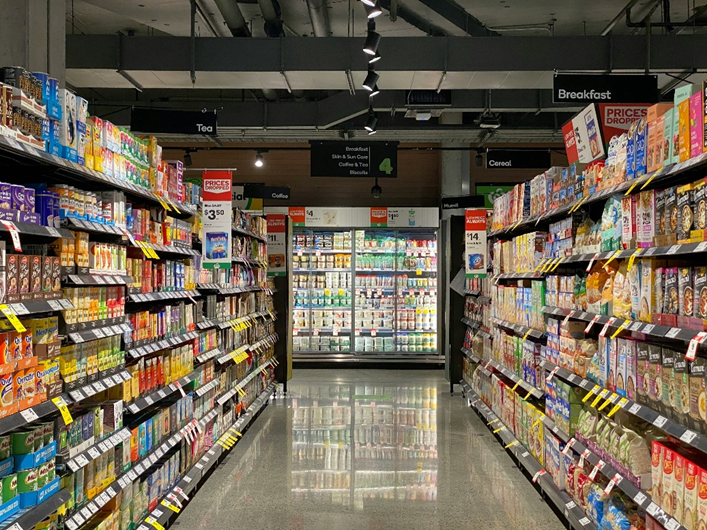
Your weekly shopping takes place on the battlefields of an ongoing power struggle in the aisles: What ends up on the shelf at what price and in whose store depends not only on consumer preference but also on hard bargaining between global fast-moving consumer goods (FMCG) giants and supermarket chains. For antitrust lawyers, food retail has quietly become one of the most dynamic enforcement frontiers as cases on both sides of the Atlantic demonstrate.
Food retail consolidation in Germany
EDEKA, Germany’s largest supermarket group by revenue, has filed for clearance of its planned acquisition of 202 stores from supermarket chain Tegut, along with 41 automated Teo convenience locations, a central bakery supplying the stores with baked goods, and associated logistics infrastructure. Tegut itself is a regional full-range supermarket chain with a strong footprint in central Germany. The German Federal Cartel Office (FCO) has announced it will conduct a thorough investigation, with a focus on two dimensions: (i) the impact on competition in local food retail markets, and (ii) buyer power toward suppliers.
Supermarket consolidation is not new territory for the FCO: The regulator has a well-documented history of scrutinizing EDEKA’s acquisitions. The greatest attention has probably been caused by the back-and-forth surrounding EDEKA’s planned takeover of around 450 Tengelmann stores in 2015. After the FCO initially prohibited the merger, it was subsequently authorised by a ministerial permission granted by the then Minister for Economic Affairs (a distinctive feature of German competition law previously covered on this blog). However, following complaints from competitors, the permission was immediately revoked by the Higher Regional Court Düsseldorf, ultimately resulting in a settlement between the involved parties.
Austria is leading the way – consolidation with site-by-site remedies
Just across the border, the Austrian Federal Competition Authority (BWB) has just cleared two supermarket transactions involving former Unimarkt stores, acquired by the supermarket chains SPAR and REWE respectively, both subject to conditions. In SPAR’s case, 17 out of 23 outlets and in REWE’s case ten out of 20 outlets came with a “retailer remedy”: These stores must be run by independent merchants, with autonomy over prices and product ranges – explicitly to preserve competition with other food retailers both within and outside the SPAR/REWE group and to safeguard regional suppliers. For seven locations, SPAR has also committed not to acquire any further grocery stores that are within a five-minute drive for the next 20 years.
When the supplier turns the table: Mars/Kellanova and portfolio power
Retail consolidation is only one side of the equation. The European Commission review of Mars’s USD 36 billion acquisition of Kellanova completed in December 2025 illustrates how supplier-side bargaining power is tested in merger control. The deal combined Mars’s confectionery and pet care portfolio (including Snickers, M&M’s and Whiskas) with Kellanova’s snack lineup (notably Pringles and Kellogg’s cereals), creating one of the largest branded FMCG suppliers to European grocery retailers.
The Commission examined (as explained in a snack-size portion in its recently published Merger Brief) whether the combined portfolio would give Mars excessive leverage in negotiations with retailers. Centre of this bargaining power theory of harm is the so-called “basket effect”. The underlying logic is that if enough brands of one supplier are “must-haves”, shoppers who cannot find them in one store will simply switch to a competing store, taking their entire basket spend with them. That consumer behaviour is what gives the supplier its leverage: The retailer, facing a real risk of lost footfall, has little choice but to accept the supplier’s terms across the board.
During an in-depth Phase II investigation, the Commission tested this against consumer surveys and real-world shopping data. The evidence revealed no significant basket-level migration: Shoppers substituted within categories or left without a given product, but did not switch stores. Unconditional clearance followed. What was particularly noteworthy was the detailed consideration the Commission gave to individual products. For instance, despite a certain degree of brand loyalty, a key factor for the Commission’s assessment was that products such as Pringles are, by their very nature, purchased infrequently and driven by impulse.
US flashpoints: Lessons from New York’s independent grocers
The dynamics in consolidation within the European food retail sector are clearly mirrored in the US. In many US metropolitan areas, the top two or three grocery chains apparently hold between 40% and 75% of local market share, with Walmart allegedly exceeding 60% in dozens of areas. New York City is somewhat of an outlier, with a higher density of independent grocers. In recent news, Mondelez, the maker of brands such as Oreo, Milka, and Ritz, has ended its Direct Store Delivery (DSD) service for approximately 1,000 independent grocery stores in New York City, while continuing to provide it to large chain retailers. DSD is not just a logistics preference. It means Mondelez staff stock shelves, manage inventory, and handle promotions in-store. Losing it shifts those costs and that operational burden directly onto the independent stores.
The political response has arrived in the form of a proposed “Consumer Grocery Pricing Fairness Act,” which would prohibit suppliers from offering discriminatory pricing and service terms to different classes of retailers – effectively reviving, at state level, the spirit of the federal Robinson-Patman Act of 1936. The Act aimed to protect small retail shops against competition from chain stores by setting minimum retail prices, but its enforcement has declined significantly since the 1980s.
Meanwhile, documents unsealed in a Federal Trade Commission proceeding have shed light on how Walmart has used its buyer power with PepsiCo to secure certain pricing terms. Walmart inter alia required PepsiCo to raise its prices for all retailers who attempted to undercut Walmart’s prices.
A market of many battles: Food retail as an antitrust hotspot
Few markets generate as wide a spectrum of antitrust theories of harm as food retail. In Germany, we have seen it all (and always under colourful names), for instance the notorious “sausage cartel” (price-fixing among sausage manufacturers) or the ban on so-called “wedding rebates” (abuse of dominance by demanding additional rebates following the acquisition of another supermarket chain by EDEKA).
A first of its kind is the Commission’s ongoing investigation into Red Bull’s category management practices, which allegedly restrict competition in the energy drinks sector. Another layer has emerged due to supermarket chains’ ever-increasing vertical integration. With their private label products, supermarket chains are competing directly with branded manufacturers, which further results in antitrust friction (e.g. through aggressive pricing policies, such as selling coffee below cost price).
Outlook
It remains to be seen whether consolidation on both sides will trigger new antitrust scrutiny in the future. The FCO will have to balance local competition in the retail sector against further concentration of market/buyer power on either side of the market.

 Antitrustpolitics.com